Five cognitive distortions worth knowing by name
Here are five thinking patterns that make a bad day look worse. Each one comes with an example and a question to ask when you catch it.
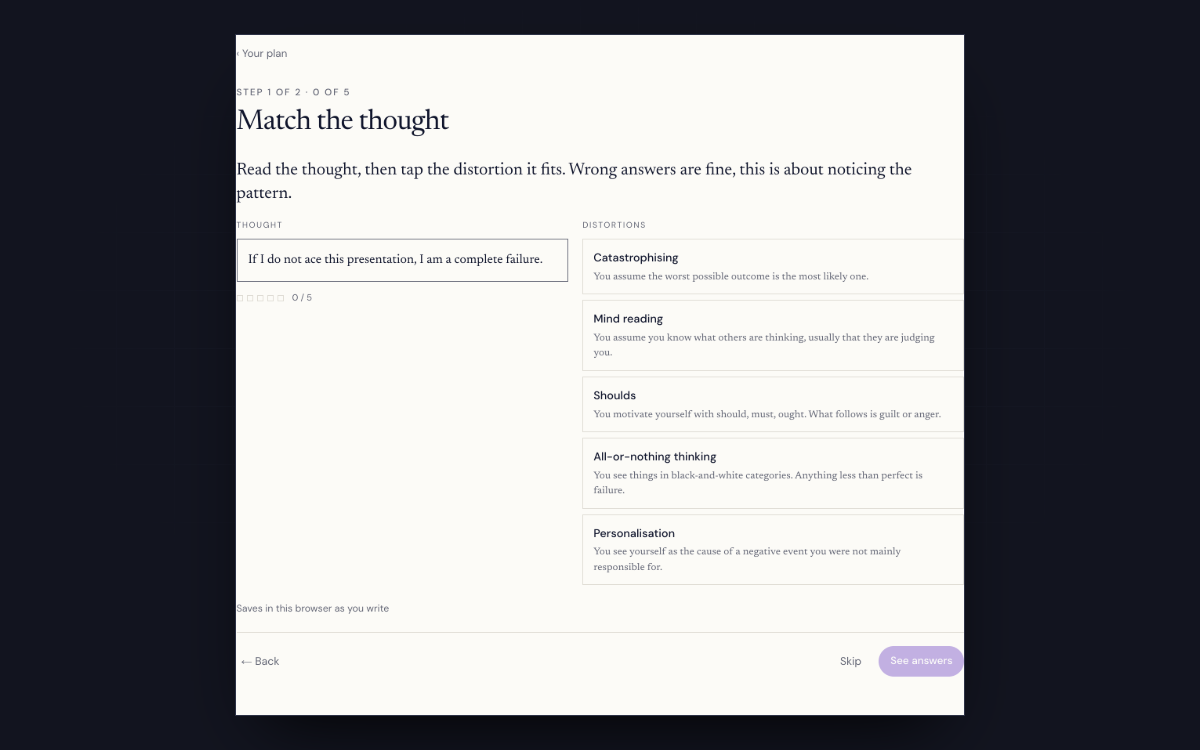
Cognitive distortions are habits of thinking that make a situation look worse than the evidence says. The idea comes from cognitive behavioural therapy. Most of this list is David Burns’s, from The Feeling Good Handbook.
Longer lists run past ten. We picked the five we catch ourselves in most.
The five
All-or-nothing thinking
If I do not ace this presentation, I am a complete failure. Anything short of perfect counts as failure in this one. Ask what the partial truth is.
Catastrophising
You treat the worst outcome as the likeliest one. Your boss hasn’t replied to a message, so you must be getting fired. Write down what’s most likely to happen next to the worst case, and read the two together.
Mind reading
Everyone at the party thought I was boring. You can’t know what they thought. What would you ask them if you could?
Personalisation
A friend cancels your plans and you decide they must be angry with you. Personalisation puts you at the centre of something that was mostly down to other things, like their week or their boss. List two other reasons they might have cancelled.
Shoulds
You push yourself with should, must and ought. I should be further along in my career by now. Swap the should for "I would like to" and read the sentence again.
Naming it is most of the fix
A distorted thought passes itself off as a plain description of what’s happening. Once you can say "that’s catastrophising", you can ask the question that goes with it.
The ways out are questions because you’ll believe an answer you came up with yourself.
Practise on somebody else’s thoughts first
A distortion is easier to spot in a sentence that isn’t yours, so start with other people’s thoughts before you try your own.
Questions
What are the most common cognitive distortions?
All-or-nothing thinking, catastrophising, mind reading, personalisation and shoulds.
Is there a cognitive distortions worksheet?
Our workspace has one. You match five unhelpful thoughts to the five patterns, then read your matches back with each pattern named. It saves in your browser.
Is this the same as therapy?
It’s one tool from cognitive behavioural therapy. If you’re struggling with your mental health, talk to your GP or a therapist.